
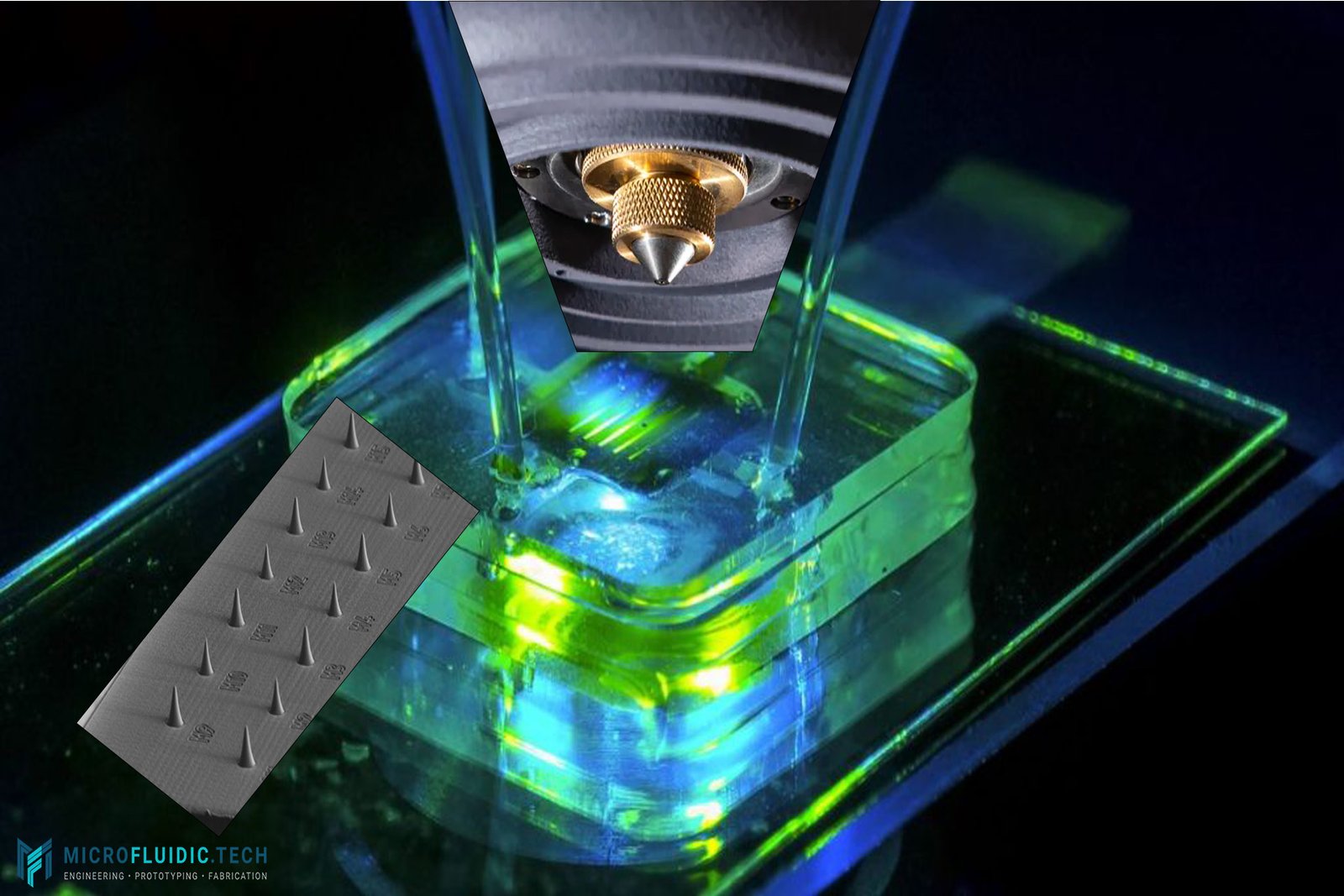
The integration of femtosecond laser micromachining into polymer microfluidics is revolutionizing how researchers design and manufacture next-generation lab-on-a-chip systems. Unlike traditional photolithography or molding techniques, femtosecond lasers enable precise, rapid, and mask-free fabrication of complex microchannel networks. This approach minimizes thermal damage, maintains surface integrity, and allows direct processing of transparent polymers such as PMMA, PDMS, and polycarbonate—materials essential for biomedical and diagnostic devices.
How Femtosecond Lasers Transform Microfluidic Fabrication
Femtosecond laser pulses—lasting only 10⁻¹⁵ seconds—deliver ultrahigh peak power that ablates material via non-thermal mechanisms, creating clean and smooth channels even at sub-micron precision.
Key advantages include:
-
3D patterning flexibility: Easily fabricate microchannels, reservoirs, and through-holes in multilayer polymer structures.
-
Reduced heat-affected zones: Maintains material transparency and biocompatibility.
-
Rapid prototyping: Eliminate the need for cleanroom environments or photomasks.
-
High reproducibility: Enables controlled optimization of fluence, scanning speed, and pulse repetition rate for application-specific needs.
Biomedical and Analytical Applications
Femtosecond-laser-fabricated microfluidic platforms are enabling innovations across:
-
Biosensing: Integration of optical detection zones for point-of-care diagnostics.
-
Cell culture and organ-on-chip systems: Micron-scale control of cellular microenvironments.
-
Drug screening and chemical synthesis: High-throughput microreactors for faster R&D.
-
Biocompatible chip production: Maintaining smooth channel surfaces supports safe cell adhesion and flow dynamics
