
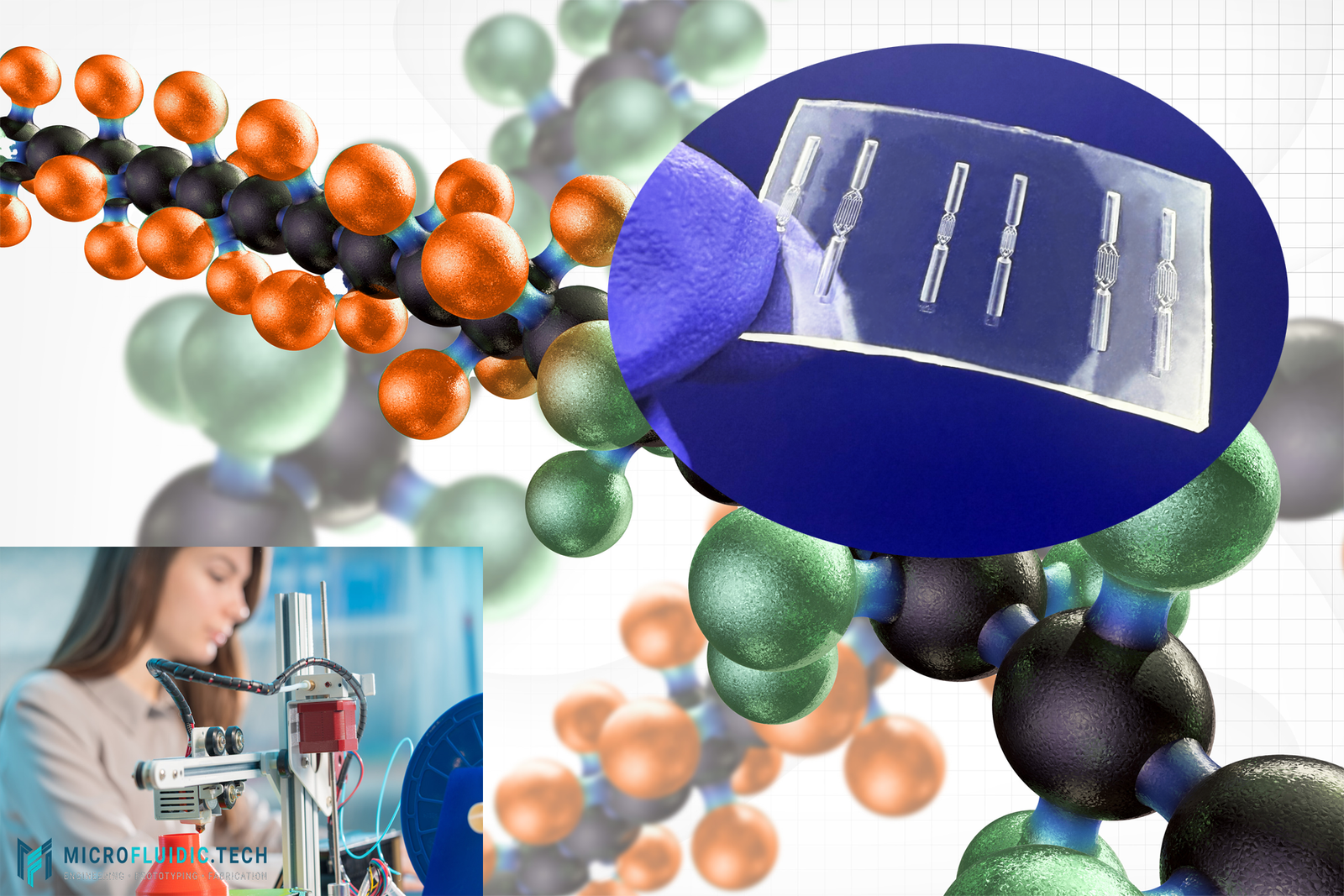
Overview
Polymer microfluidics has emerged as a cornerstone technology for lab-on-a-chip (LOC) and micro total analysis systems (µTAS), enabling low-cost, scalable, and disposable devices for biomedical diagnostics, chemical analysis, and point-of-care testing. In this influential review, Tsao presents a clear and practical framework for understanding polymer microfluidic fabrication, with a strong emphasis on bridging academic research and commercial manufacturing
The article highlights how polymer materials—particularly polydimethylsiloxane (PDMS) and thermoplastics—have largely replaced silicon and glass due to their affordability, flexibility in fabrication, and suitability for mass production.
Why Polymers Matter in Microfluidics
Traditional microfluidic devices relied on silicon and glass, which required expensive cleanroom infrastructure and complex fabrication processes. Polymer materials transformed the field by offering:
- Low material and tooling costs
- Simplified fabrication workflows
- High optical transparency
- Biocompatibility for biological and medical applications
- Disposable device capability, critical for diagnostics and healthcare
These advantages have made polymer microfluidics accessible to standard research laboratories and attractive for industrial-scale manufacturing.
Key Polymer Materials: PDMS vs. Thermoplastics
PDMS (Polydimethylsiloxane)
PDMS remains the most widely used material in academic microfluidics research due to its:
- Elasticity and flexibility
- High gas permeability (ideal for cell culture)
- Optical transparency
- Simple soft-lithography fabrication
However, PDMS also presents challenges, including solvent swelling, sample absorption, hydrophobic recovery, and limited mechanical rigidity. These limitations can restrict its use in high-pressure or solvent-intensive applications.
Thermoplastics
Thermoplastics such as PMMA, PC, PS, and cyclic olefin polymers (COC/COP) offer:
- High mechanical stability
- Excellent chemical and solvent resistance
- Low water absorption
- Compatibility with high-pressure systems
These properties make thermoplastics especially suitable for commercial microfluidic products, including chromatography chips and diagnostic cartridges.
Fabrication Strategies Explained
PDMS Fabrication
PDMS devices are typically fabricated using soft lithography, where liquid PDMS is cast onto a micromold and cured. Bonding is achieved easily through plasma treatment or direct adhesion to glass or PDMS substrates. This process is reliable, high-yield, and ideal for rapid prototyping and medium-volume production.
Thermoplastic Fabrication
Thermoplastic microfluidics can be fabricated using two main approaches:
- Rapid Prototyping
- CNC micro milling
- Laser ablation
- Digital craft cutting
These methods enable fast design iteration and proof-of-concept development.
- Replication Techniques
- Hot embossing
- Injection molding
- Roller imprinting
These processes support high-throughput, industrial-scale production, making them essential for commercialization.
Bonding remains a critical step in thermoplastic fabrication, with techniques ranging from thermal fusion and solvent bonding to adhesive and surface-modified bonding.
Advances in Polymer Microfluidic Fabrication
The review highlights several cutting-edge developments, including:
- Alternative polymer materials such as thermoset polyesters (TPE) with improved chemical resistance
- Hybrid microfluidic devices combining PDMS and thermoplastics
- Reversible and reusable bonding techniques
- 3D printing as a powerful rapid prototyping tool
- Advanced micro mold technologies using metallic glasses and modular building blocks
These innovations expand design flexibility and improve performance while reducing fabrication barriers.
Commercialization Considerations
A major strength of this article is its focus on technology transfer and commercialization. Tsao emphasizes that material selection and fabrication strategy must align with:
- Target production volume
- Fabrication throughput
- Facility and tooling costs
- Application-specific performance requirements
While PDMS is well-suited for low- to medium-volume production and research use, thermoplastics dominate high-volume commercial manufacturing, particularly when paired with injection molding and fast bonding methods.
Key Takeaway
There is no one-size-fits-all solution in polymer microfluidics. Successful device development depends on carefully balancing material properties, fabrication complexity, cost, and scalability. As polymer microfluidics continues to mature, advances in fabrication techniques will play a decisive role in transforming laboratory prototypes into commercially viable products.
This review serves as a practical guide for researchers, engineers, and product developers navigating the evolving landscape of polymer microfluidic manufacturing.
