
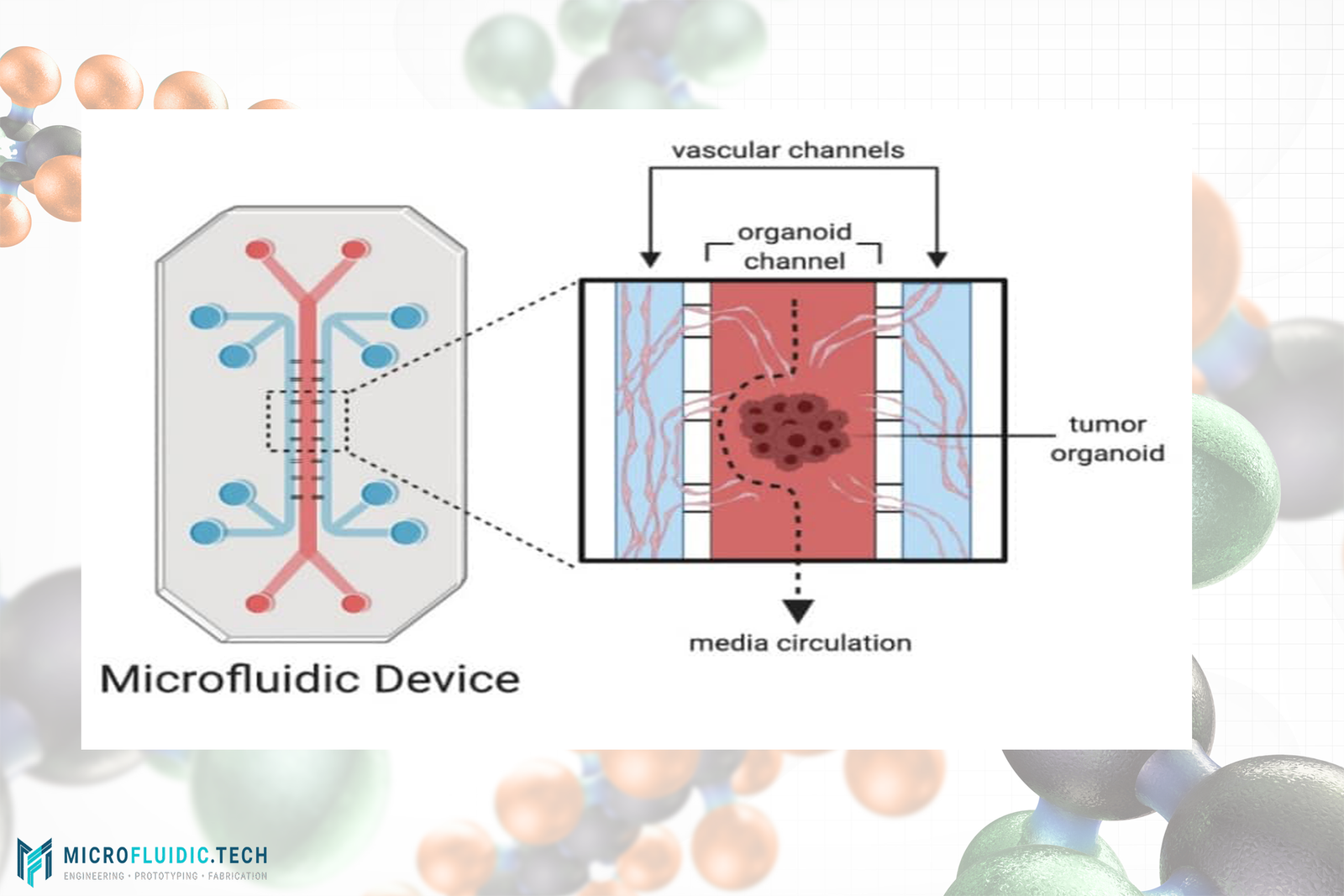
The recent review published in Frontiers in Bioengineering and Biotechnology (2025) explores how organoids-on-chip technology is transforming biomedical research by integrating advanced microfluidic systems with stem-cell-derived organ models.
Organoids—miniaturized, lab-grown versions of human organs—have revolutionized in vitro modeling. However, traditional culture methods face critical limitations, including poor maturation, lack of vascularization, and limited control over the cellular microenvironment.
Microfluidic platforms address these challenges by enabling precise control of fluid flow, biochemical gradients, and mechanical forces, creating a dynamic environment that more closely mimics human physiology.
Key Innovations Highlighted
1. Dynamic Microenvironment Control
Microfluidic chips allow continuous perfusion and fine-tuned control of nutrients, oxygen, and signaling molecules—enhancing organoid growth, functionality, and lifespan.
2. Multi-Organoid Integration
Advanced platforms now connect multiple organoids (e.g., liver–gut–brain systems), enabling the study of inter-organ interactions and systemic disease pathways.
3. Enhanced Reproducibility
Microfluidics reduces batch variability by standardizing culture conditions—one of the biggest bottlenecks in organoid research.
4. Bioprinting & Automation
Emerging approaches such as droplet microfluidics and 3D bioprinting enable scalable and high-throughput production of organoids with consistent size and structure.
Applications in Industry and Research
-
Drug screening & toxicity testing
-
Disease modeling (cancer, neurological, liver, kidney disorders)
-
Personalized medicine platforms
-
Reduction of animal testing
These systems offer more predictive and human-relevant results compared to traditional 2D cell cultures and animal models.
Current Challenges
Despite rapid progress, several barriers remain:
-
Limited vascularization and immune system integration
-
Scalability and manufacturing challenges
-
Standardization across labs and platforms
-
Regulatory pathways for clinical adoption
Future Outlook
Organoids-on-chip represent a major step toward human-on-chip systems, where multiple organ models are interconnected to simulate full-body physiology.
With continued advancements in microfluidics, biomaterials, and AI-driven design, this technology is expected to become a cornerstone of next-generation diagnostics, drug discovery, and regenerative medicine.
