
Introduction
CAR-T cell therapy is one of the most promising breakthroughs in modern cancer treatment. However, its high cost and complex manufacturing process limit widespread adoption. Microfluidics is emerging as a powerful solution to these challenges, enabling more efficient and scalable production of engineered T cells.
Why CAR-T Manufacturing Needs Innovation
Traditional CAR-T production relies on labor-intensive and batch-based processes. These methods introduce variability, increase costs, and limit scalability. As demand for personalized therapies grows, there is an urgent need for smarter manufacturing systems.
Microfluidics: A Game-Changer
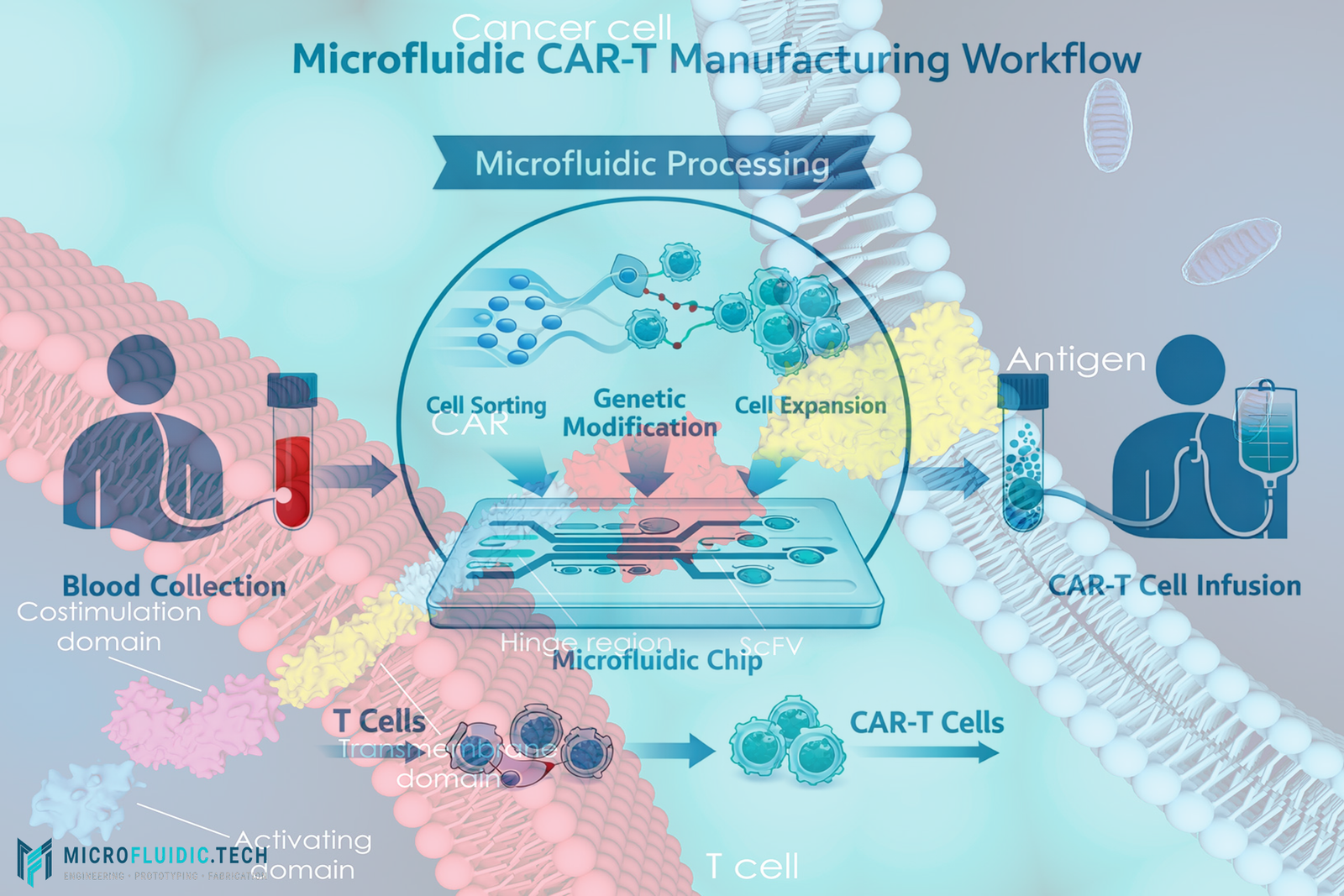
Microfluidics allows precise manipulation of fluids at the microscale, making it ideal for handling delicate biological samples like T cells. By integrating multiple steps into a single platform, microfluidic systems streamline the entire workflow.
Key Benefits of Microfluidic Systems
Precision at the Single-Cell Level
Unlike conventional methods, microfluidics enables analysis and selection of individual cells, improving therapeutic performance.
Automation and Integration
Microfluidic platforms can combine cell activation, modification, and expansion into one automated system, reducing human intervention.
Real-Time Monitoring
Built-in sensors allow continuous tracking of cell health and activity, ensuring consistent product quality.
Cost Reduction
Lower reagent consumption and reduced labor requirements make the process more cost-effective.
Applications in CAR-T Therapy
- Single-cell screening and selection
- High-throughput cell sorting
- On-chip genetic modification
- Continuous quality monitoring
Challenges to Overcome
Despite its advantages, microfluidics must address:
- Industrial scalability
- Regulatory compliance
- Standardization of platforms
These challenges are actively being addressed through ongoing research and innovation.
The Future of Microfluidics in Biomanufacturing
Microfluidics has the potential to enable fully automated, decentralized CAR-T production systems. This could significantly reduce costs and make life-saving therapies accessible to more patients worldwide.
Conclusion
Microfluidic technology represents a major step forward in CAR-T cell therapy manufacturing. By improving precision, efficiency, and scalability, it has the potential to reshape the future of personalized medicine.
