
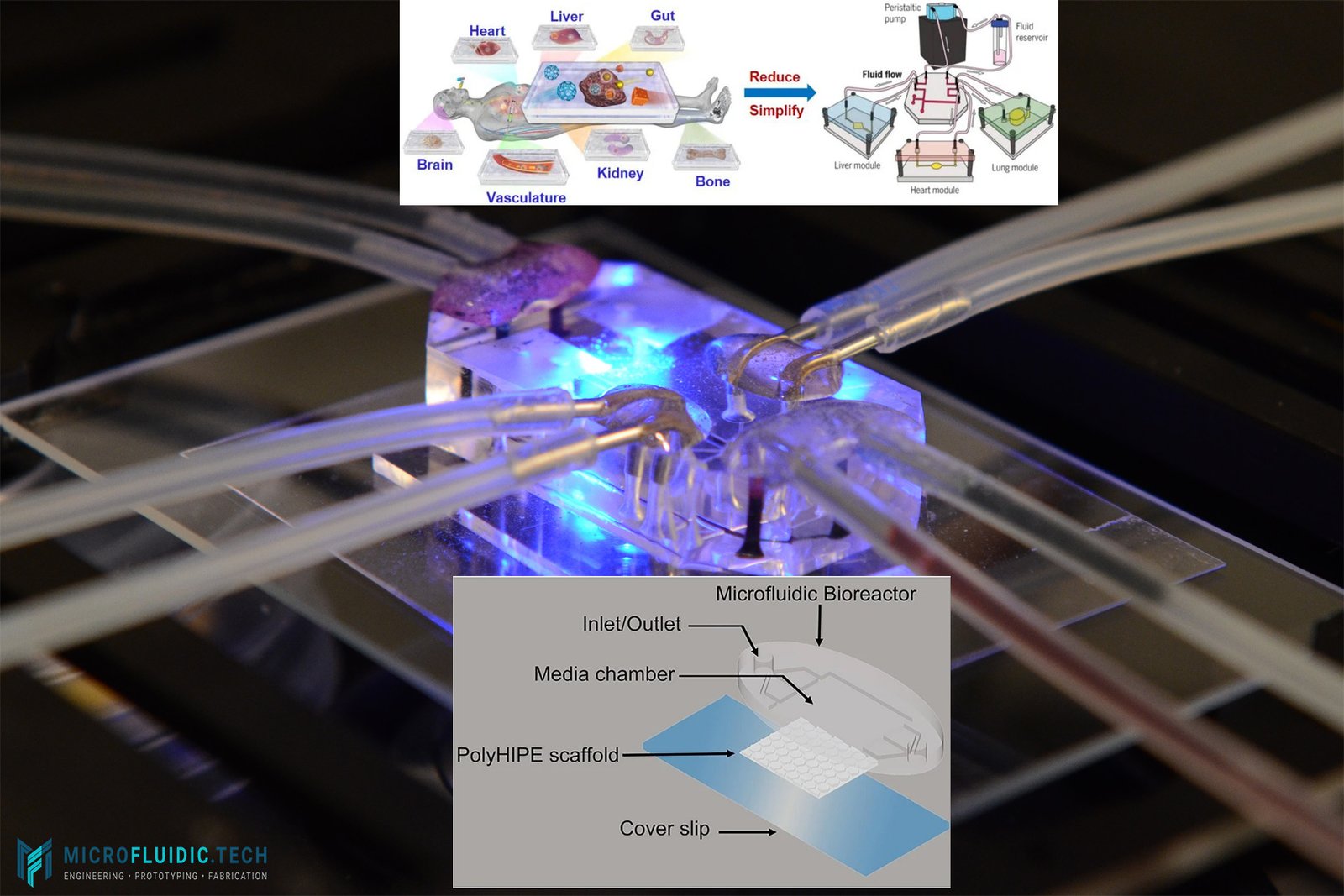
Introduction
Microfluidic technologies are rapidly transforming biomedical research, diagnostics, and drug discovery. A critical step in fabricating reliable microfluidic systems is the bonding of polymer layers to create sealed microchannels. This article reviews recent advances in thermoplastic microfluidic fabrication and bonding techniques, highlighting their importance for scalable, high-performance organ-on-chip (OOC) platforms.
Key Fabrication Methods for Microfluidics
Thermoplastics such as polycarbonate (PC), PMMA (acrylic), and COC are widely used due to their mechanical strength, optical clarity, and compatibility with mass production.
Common fabrication methods include:
- Hot embossing & injection molding – high precision and scalability
- Laser ablation – flexible and rapid prototyping
- Micro-milling – suitable for complex geometries
Each method presents trade-offs between cost, scalability, and surface quality.
Bonding Techniques: Challenges and Opportunities
Bonding is one of the most critical steps in microfluidic device fabrication. Poor bonding can lead to leakage, contamination, or structural failure.
The article highlights several bonding approaches:
1. Thermal Fusion Bonding
- Uses heat and pressure above the polymer glass transition temperature
- Strong bonding but may deform microchannels
2. Solvent and Chemical Bonding
- Enables bonding at lower temperatures
- Risk of chemical contamination and cytotoxicity
3. Laser Welding (Emerging Technology)
- Localized heating at the interface
- High precision and minimal thermal damage
- Requires optical tuning (transparent top layer, absorbent bottom layer)
Why Thermoplastics Matter for Microfluidics
Compared to traditional PDMS systems, thermoplastics offer the following:
- Better scalability for industrial production
- Improved mechanical strength
- Compatibility with automated manufacturing
These properties make thermoplastics highly suitable for organ-on-chip platforms and point-of-care diagnostics.
Applications in Biosensing and Organ-on-Chip Systems
Modern microfluidic systems are increasingly integrated with:
- Optical and fluorescence biosensors
- Lab-on-chip diagnostic platforms
- High-throughput drug screening systems
Reliable bonding is essential to ensure:
- Long-term cell culture stability
- Accurate biosensor readouts
- Reproducibility across devices
Future Trends
The field is moving toward the following:
- Laser-based precision bonding technologies
- 3D microfluidic architectures
- Integration with AI-driven automation systems
- Scalable manufacturing for clinical and industrial use
These advances are paving the way for next-generation organ-on-chip platforms with real-time monitoring capabilities.
Conclusion
Thermoplastic microfluidics, combined with advanced bonding techniques such as laser welding, are unlocking new possibilities in biomedical engineering. As the demand for scalable, reliable, and high-throughput systems grows, innovations in fabrication and bonding will play a central role in shaping the future of organ-on-chip technologies.
https://pmc.ncbi.nlm.nih.gov/articles/PMC9966054/#sec2-ijms-24-03232
