
Introduction
Traditional biomedical models—such as animal testing and 2D cell cultures—often fail to accurately replicate human physiology. This limitation has slowed innovation in drug development and disease research.
Emerging organ-on-a-chip (OoC) technology, powered by microfluidics, offers a transformative alternative by recreating the complex biological environment of human organs on a miniaturized chip.
What is Organ-on-a-Chip Technology?
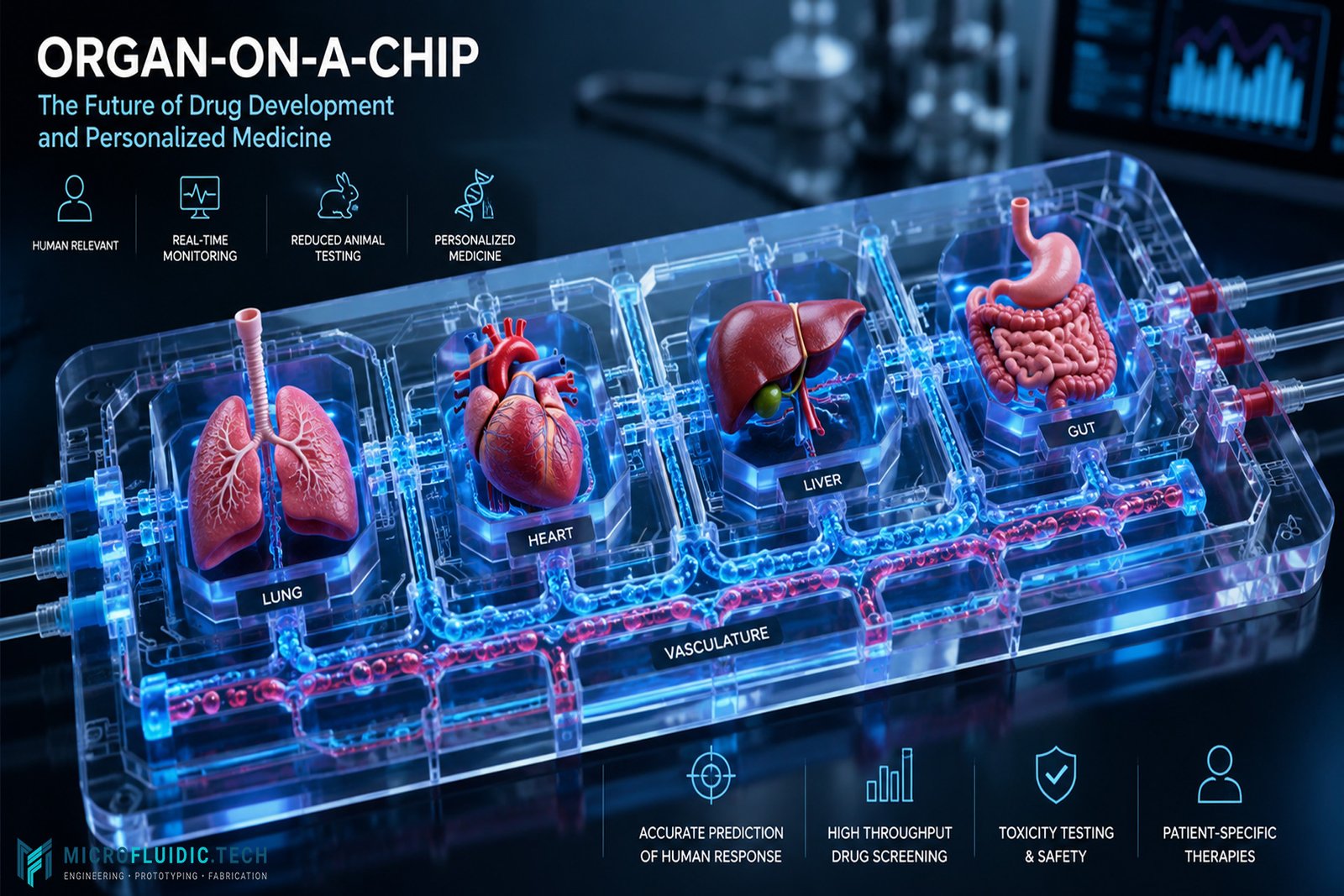
Organ-on-a-chip systems are microfluidic devices that simulate the structure and function of human organs. These platforms integrate:
- Living human cells
- Controlled biochemical environments
- Mechanical forces (e.g., breathing or blood flow)
This enables researchers to closely mimic real human organ behavior in vitro.
Key Types of Organ-on-a-Chip Systems
Recent advancements have enabled the development of multiple organ models:
Lung-on-a-Chip
Simulates alveolar structures and breathing motion, useful for respiratory disease research and viral studies.
Gut-on-a-Chip
Replicates intestinal peristalsis and microbiome interactions, enabling deeper insights into digestion and immune responses.
Heart-on-a-Chip
Allows monitoring of cardiac tissue contraction and electrical activity for cardiotoxicity testing.
Liver-on-a-Chip
Recreates metabolic and detoxification processes critical for drug screening.
Vasculature-on-a-Chip
Models blood vessel formation and flow dynamics for studying vascular diseases.
Multi-Organ Systems (Body-on-a-Chip)
Integrates multiple organ models to simulate systemic interactions across the human body.
Applications in Drug Development
Organ-on-a-chip technology is reshaping the pharmaceutical industry in several ways:
1. Drug Screening
- Enables more accurate prediction of human responses
- Reduces reliance on animal testing
2. Toxicity Testing
- Detects adverse drug effects earlier
- Improves safety profiles
3. Personalized Medicine
- Uses patient-derived cells
- Allows individualized treatment evaluation
4. Disease Modeling
- Replicates complex diseases (e.g., cancer, infections)
- Enhances understanding of disease mechanisms
These capabilities significantly reduce development time and costs while improving success rates.
Advantages Over Traditional Methods
Compared to conventional models, organ-on-a-chip systems offer:
- Higher physiological relevance
- Real-time monitoring
- Reduced ethical concerns
- Better reproducibility
They bridge the gap between in vitro studies and clinical outcomes.
Current Challenges
Despite rapid progress, several barriers remain:
- Complex fabrication and scalability
- Standardization issues
- Integration of multiple organ systems
- Commercialization limitations
Addressing these challenges is essential for widespread adoption.
Future Outlook
The future of organ-on-a-chip technology lies in:
- Fully integrated human-on-a-chip systems
- AI-driven data analysis
- Automation and high-throughput screening
- Clinical translation and regulatory acceptance
As microfluidics continues to evolve, these platforms are expected to become a cornerstone of next-generation biomedical research.
Conclusion
Organ-on-a-chip technology represents a major leap forward in microfluidics and biomedical engineering. By closely mimicking human physiology, it enables more accurate, ethical, and efficient drug development and disease modeling.
As the technology matures, it has the potential to redefine how we approach healthcare, diagnostics, and personalized medicine.
